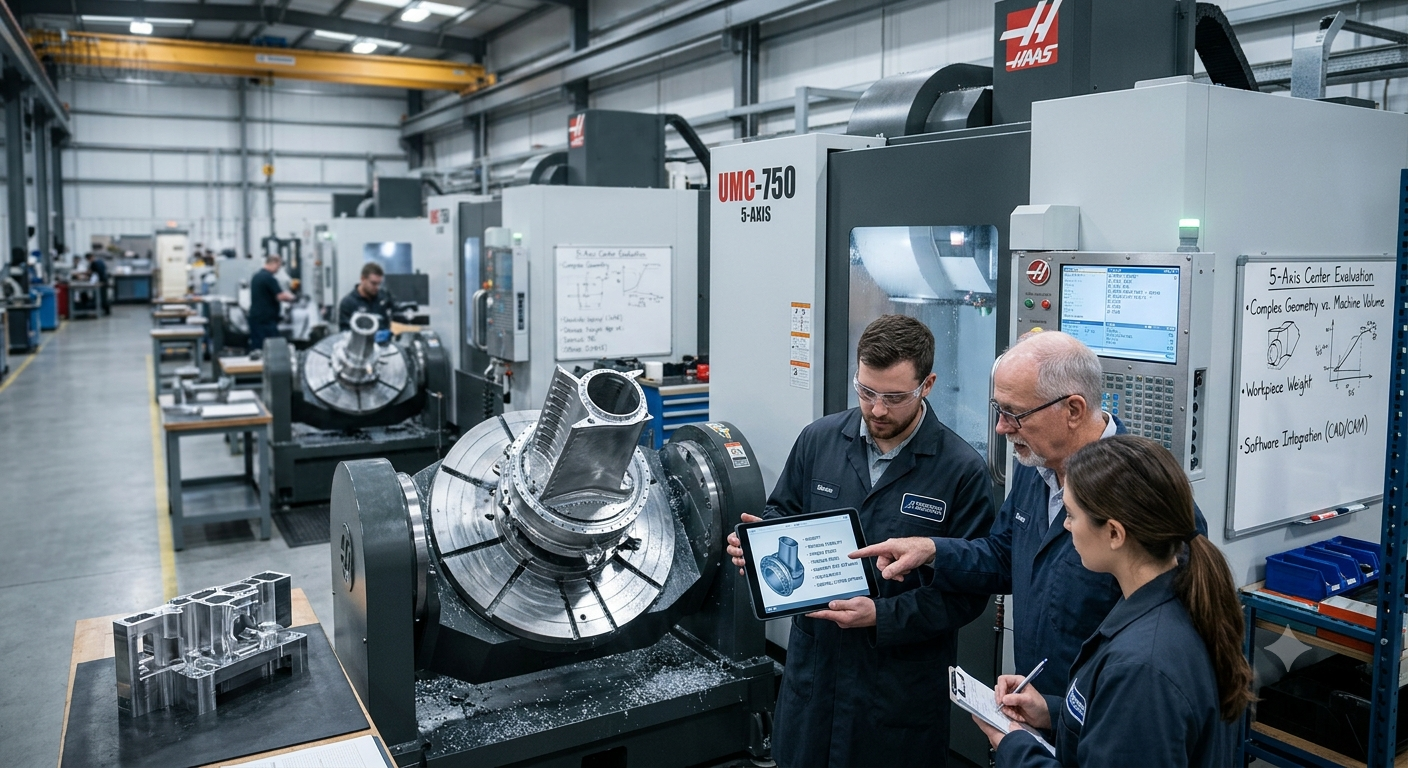
Turbine blades, impellers, surgical implants, and mold cavities are all characterized by tough angles and tight tolerances. They all require a 5-axis machine to perform well in a single operation, provided that you choose the right machine. Collaboration with a trustworthy 5-axis CNC machine supplier is the first step towards making the right decision. Here’s how to do it.
While the spindle of a 5-axis machine moves along the X, Y, and Z planes, the tool is also rotated on two additional axes. The result is that a 5-axis machine can reach almost all faces of a part without taking it off from its clamping position.
It offers the following advantages:
Before purchasing a machine, make sure you know the difference between three axes, four axis and five axis.
Identify your parts first and then move on to machine brochures. You should be clear about:
A responsible 5-axis CNC machine supplier will require all of this from you. If the machine vendor ignores these, it is an early red flag.
Not all 5-axis machines are designed the same. Major types include
| Type | Ideal for |
| Trunnion type (table-table) | Parts of small to medium size with high accuracy requirements |
| Swivel head type (head-head) | Large and heavy parts |
| Hybrid type (head-table) | Balanced flexibility |
Decide whether you will be using a 3+2 setup or 5-axis simultaneous machining. 3+2 is economic and suitable for prismatic parts. A 5-axis simultaneous machine is required for blades and impellers.
Complicated workpieces are hard on less-than-stellar machines. Pay special attention to:
ISO machine tool testing standards provide an objective criterion for assessing manufacturer claims. Request test documentation for any 5-axis machining center available.
Great hardware can be undermined by inferior software. Ensure that your machine’s control allows for:
Find out if your operators need any training. Trained personnel extract much more value from their CNC systems.
If you have higher volumes or night shifts, plan ahead. Consider:
Automation is where you get value for your money with a 5-axis CNC machine supplier who specializes in robotics.
In searching for a 5-axis milling machine to buy, the least costly quote is hardly ever the lowest cost. Take into account all:
The supplier staying with you after delivery means better protection of your investment.
Before signing anything, ask each potential 5-axis CNC machine supplier:
If you have low volumes or need fast turnaround, outsourcing can be great. Xometry, Protolabs, and Fictiv can all provide 5-axis machining. Many companies will start by outsourcing their prototyping, and once there is more consistent demand for your parts, you can purchase them. This also means that you know what specifications are needed.
Selecting a 5-axis machining center is simpler when you have a professional by your side. YRX Robotic Automation is a reputable 5-axis CNC machine supplier assisting manufacturers in choosing machines and automation according to their actual needs. If you are considering buying a 5-axis milling machine or want to set up an automated cell, our experts are here to assist.
Contact YRX Robotic Automation for a free consultation and quote now.
1. Why buy a 5-axis CNC machine?
You can make complex parts in one operation. This means your parts will be more accurate, of better quality, and faster to machine.
2. What’s the difference between a 3+2-axis machine vs. a simultaneous 5-axis machine?
Use a 3+2 machine if you need to machine complex prismatic angled components. If you require machining of complex curved shapes like blades or impellers, then use a simultaneous 5 axis machine.
3. What questions should I ask my 5-axis CNC machine supplier?
Ask them what accuracy test reports they have, what training they offer, how long there is a warranty, what spares are available, and what customers they have.
4. Should I invest in a 5-axis milling machine for sale?
If you regularly cut complex parts or are wasting time having to do multiple setups, then it could be a good investment. There are compact options available, and you can outsource initially to reduce risk.
5. What industries use 5-axis machines?
Aerospace, medical, automotive, energy, and mold making all use 5-axis machines extensively