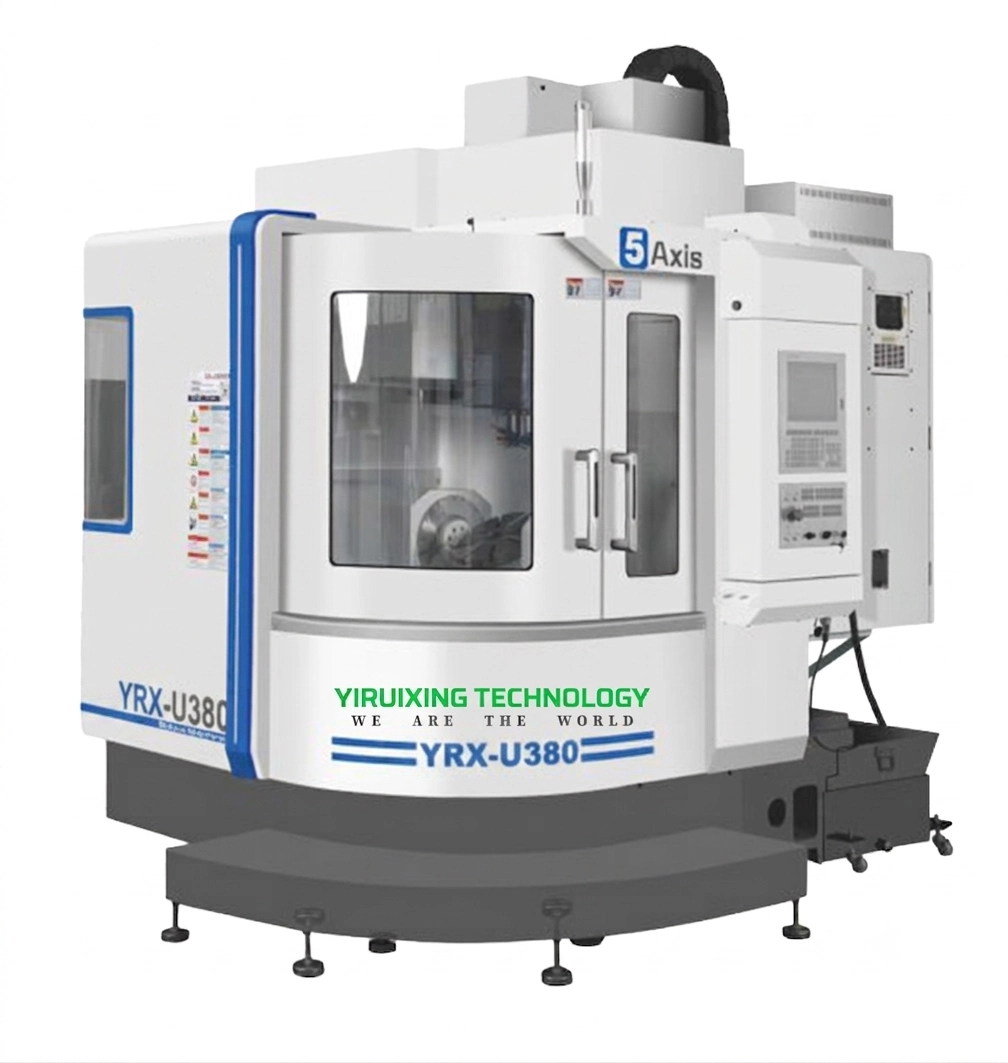
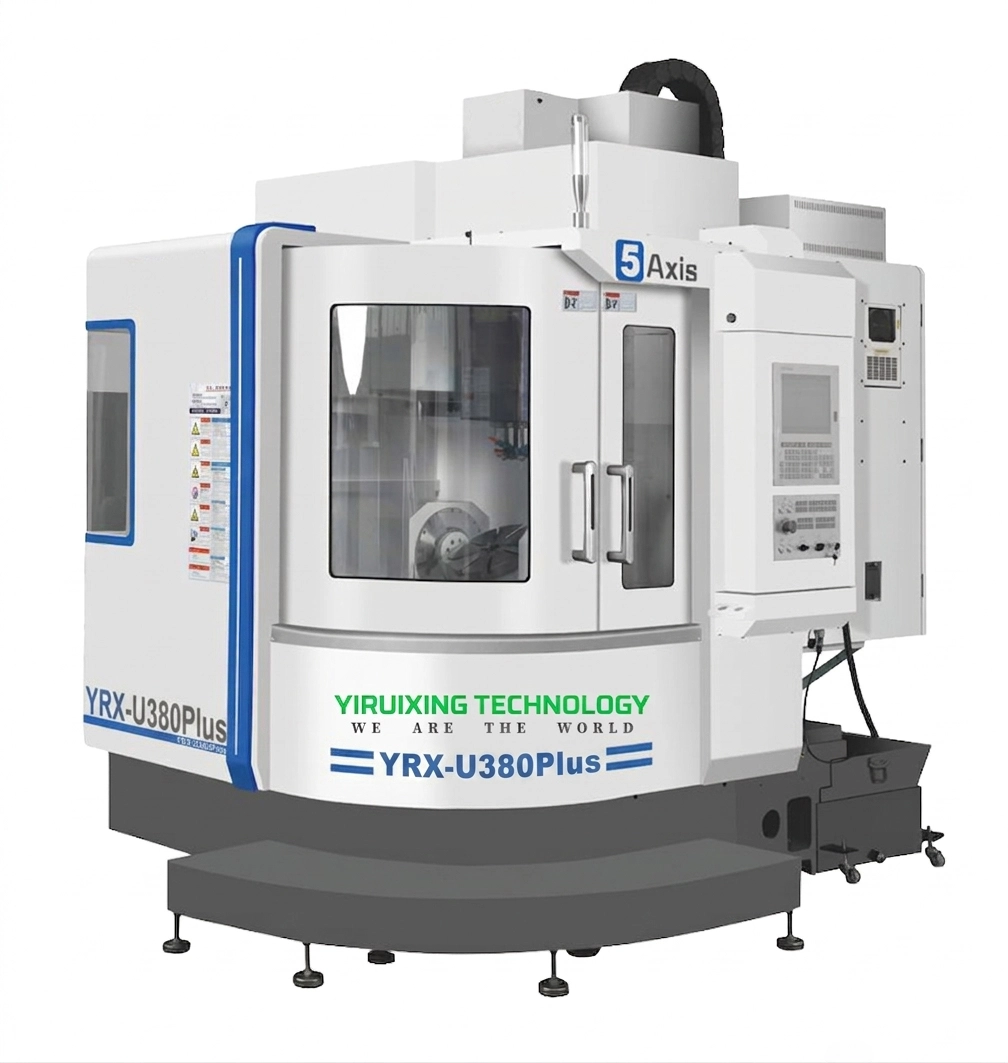
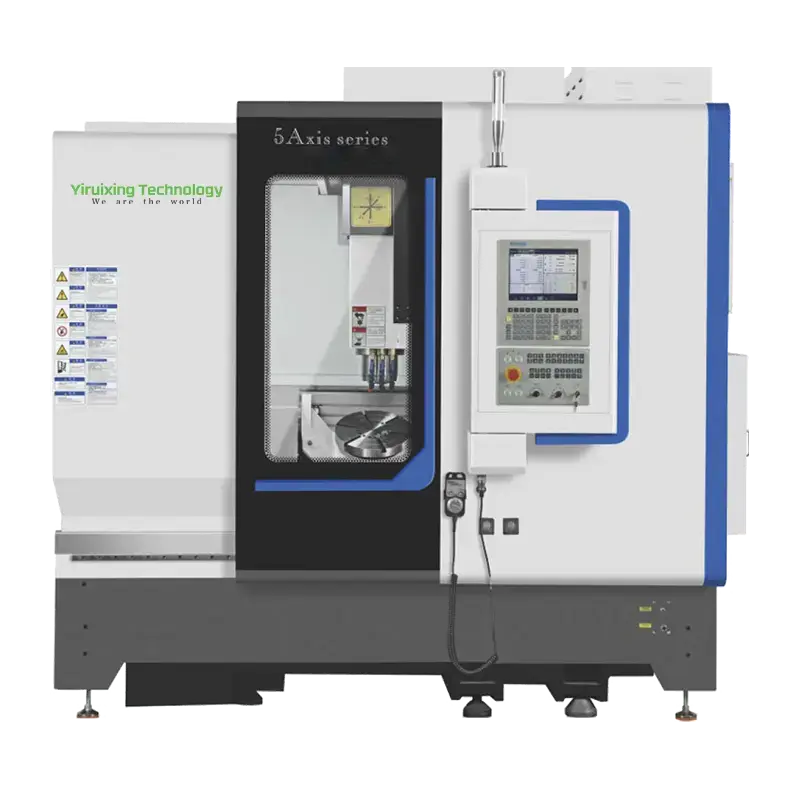
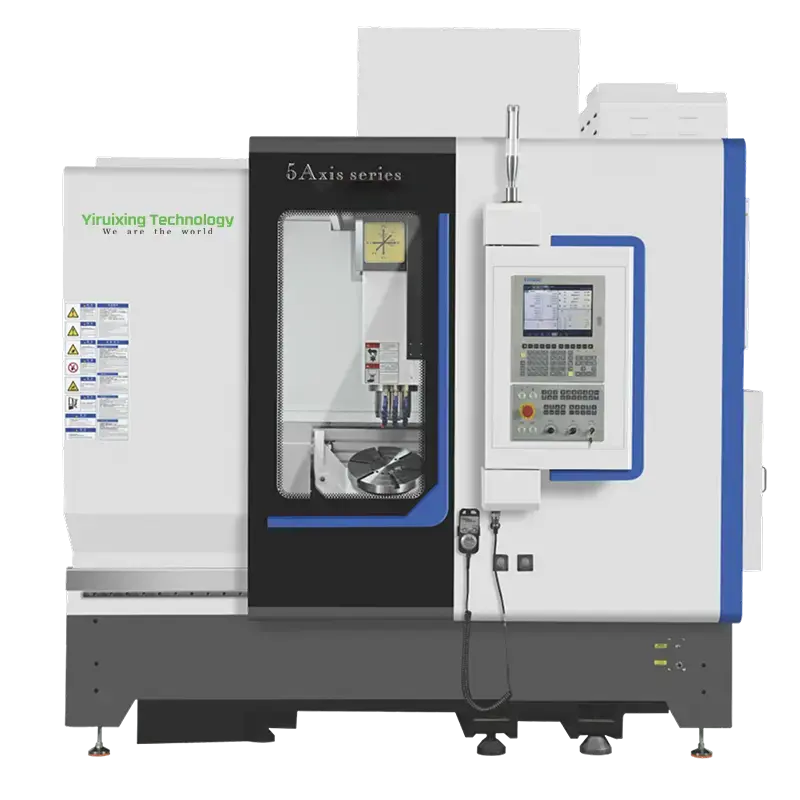
The five-axis machining center refers to an advanced CNC system designed to machine complex components by making a combination of movements using three linear axes and two rotational axes. This design differs from traditional three-axis machining systems since it is highly suited to machining complex components such as intricate contours, angled surfaces, and cavities, among others.
ISO 10791-6 provides test conditions for machining centers featuring linear and rotary axis movements, including those that feature simultaneous five-axis machining. The five-axis machining system can offer more flexibility and efficiency in the machining process due to the reduced need for re-positioning and setup in machining.
The five-axis machining technique enables the manufacturer to work on different angles without having to reorient the workpiece during the machining process. This makes the five-axis machining system highly applicable in the machining of complex shapes, surfaces, cavities, and components that may require multiple set-ups.
One of the advanced manufacturing-engineering equipment featured in the equipment list of the National Institute of Standards and Technology (NIST) is the “Ultra-precision 5-axis CNC Machining Center,” which is used to manufacture complex contoured parts. This illustrates the significance of five-axis CNC technology in advanced manufacturing and precision engineering.
Five-axis machining is also applicable to digital manufacturing standards. In the research conducted by NIST with Boeing, researchers have assessed STEP-NC programming for five-axis machining that would enhance the portability of manufacturing information from process planning and the CNC environment.
Five-axis machining centers are employed in complex applications where part geometry, precision, and repeatability are crucial factors. Some typical applications are aerospace structures, aircraft parts, energy equipment, medical components, molds and dies, robotics, and advanced industrial equipment.
Government facilities also illustrate the significance of this technology in aerospace and scientific manufacturing. The NASA Langley Research Center offers five-axis CNC machining alongside three-axis CNC machining as its advanced manufacturing capabilities for research and development hardware and aeronautics and space programs.
The NASA Johnson Space Center also possesses 3-, 4-, and 5-axis milling machines within its advanced manufacturing capabilities for flight hardware, ground support hardware, and prototype hardware.
The benefits of five-axis machining go beyond increased machine motion. Fewer setups may make machining of complex parts easier, whereas simultaneous-axis control can be used to facilitate more accurate tool pathing and machining of surfaces.
NIST also mentions the use of automation and lights-out machining in a manufacturing application featuring complex five-axis parts. According to the NIST Manufacturing Extension Partnership case study, the example manufacturer is utilizing automation in almost all of its production cells to increase productivity and machine utilization.
Among factors that should be taken into account when choosing five-axis machining technology, there are axis configuration, spindle performance, work envelope size, positioning accuracy, control capabilities, tooling, materials of workpieces, production volume, as well as compatibility with robotic and automated material handling systems.
Yiruixing Technology manufactures CNC machine tools, industrial robots, and customized automation solutions. The solutions provided by Yiruixing Technology include CNC machines, industrial robotics, and industrial automation.
Yiruixing Technology integrates machining technology and automation in a bid to assist manufacturers in enhancing production efficiency, accuracy, and repeatability. This solution is pertinent to businesses wishing to incorporate machining equipment into increasingly automated manufacturing processes.
What is a five-axis machining center?
A five-axis machining center is one that integrates three linear axes with two rotary axes and is capable of machining from different angles. ISO 10791-6 describes the test criteria for machining centers that have both linear and rotary axes.
What are the advantages of five-axis machining?
Five-axis machining enables reduced repositioning of workpieces and is best suited for machining complex contours, angles, and multi-angle parts.
What industries utilize five-axis CNC machines?
Five-axis machining is employed in aerospace, space technologies, medical manufacturing, energy, robotics, mold making, and precision engineering. For instance, NASA lists 5-axis CNC machining among other advanced manufacturing techniques used.
How is the accuracy of five-axis machining determined?
Standardized tests to determine the machining center accuracy are set by ISO. ISO 10791-6 tests the kinematic accuracy, which deals with the simultaneous movements of linear and rotary CNC axes, whereas ISO 10791-7 tests the accuracy of machined parts.
Is there a possibility to combine five-axis machining centers with automation?
Yes, five-axis CNC machining can be combined with automation in manufacturing cells including robotic loading/unloading, material handling, and process monitoring. NIST has reported manufacturing operations utilizing automation and lights-out machining for five-axis machining.