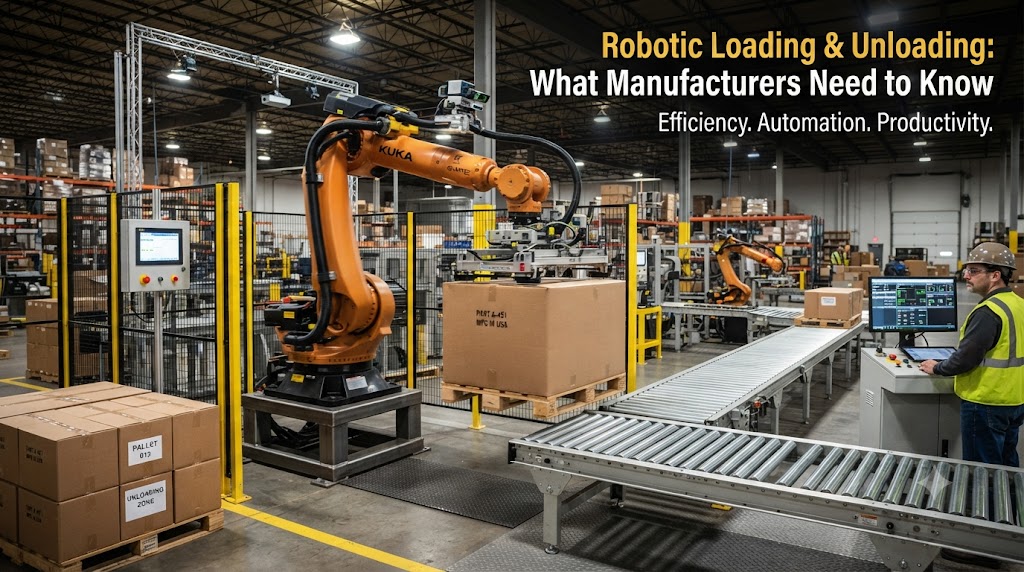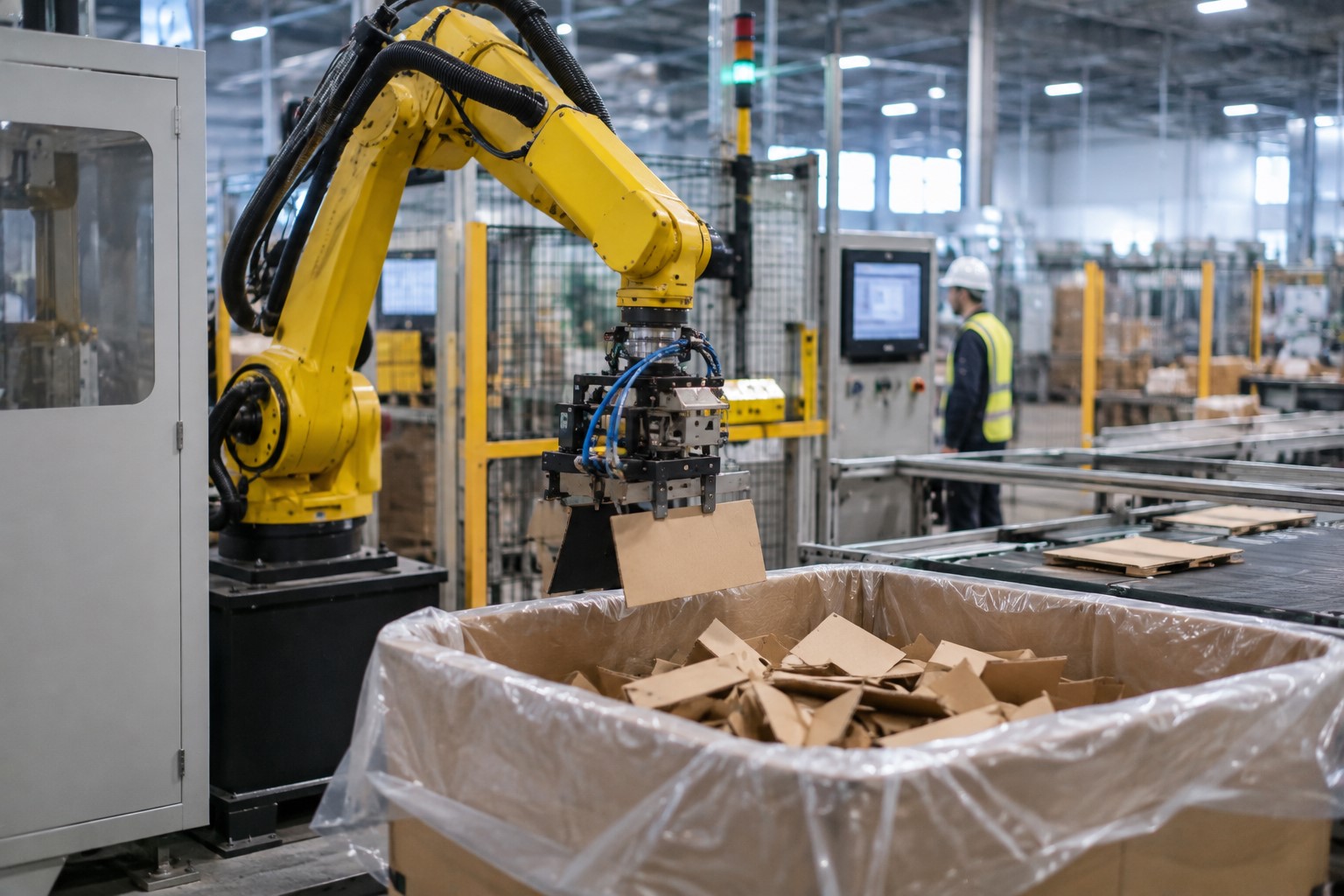
Material waste is one of the highest hidden costs in today’s manufacturing sector. High scrap rate, defect parts, incorrect cuts, overprocessing, and inefficient material handling can raise your production cost while minimizing your profitability. Here comes robotic automation that helps manufacturers reduce their material waste through better precision, consistency, process control, and efficient use of resources.
Industrial robots can do repetitive manufacturing operations using identical motions and programmed precision. By combining them with CNC machines, vision systems, conveyor belts, and automated material handling equipment, automation can lead to a more controlled production environment with fewer chances of material waste. Industry studies also identify precision, real-time monitoring, and optimized material usage as some important factors in reducing manufacturing waste through automation.
Material waste can be caused by several reasons at any point in the manufacturing process. Some of the common ones are:
A small amount of scrap becomes costly when large quantities of products are produced. It can be reduced not only by increasing the production rate but by means of precise manufacturing.
The most valuable characteristic of industrial robots is consistency. They can repeat the same trajectory and process in a very accurate manner and help eliminate mistakes that occur during manual work.
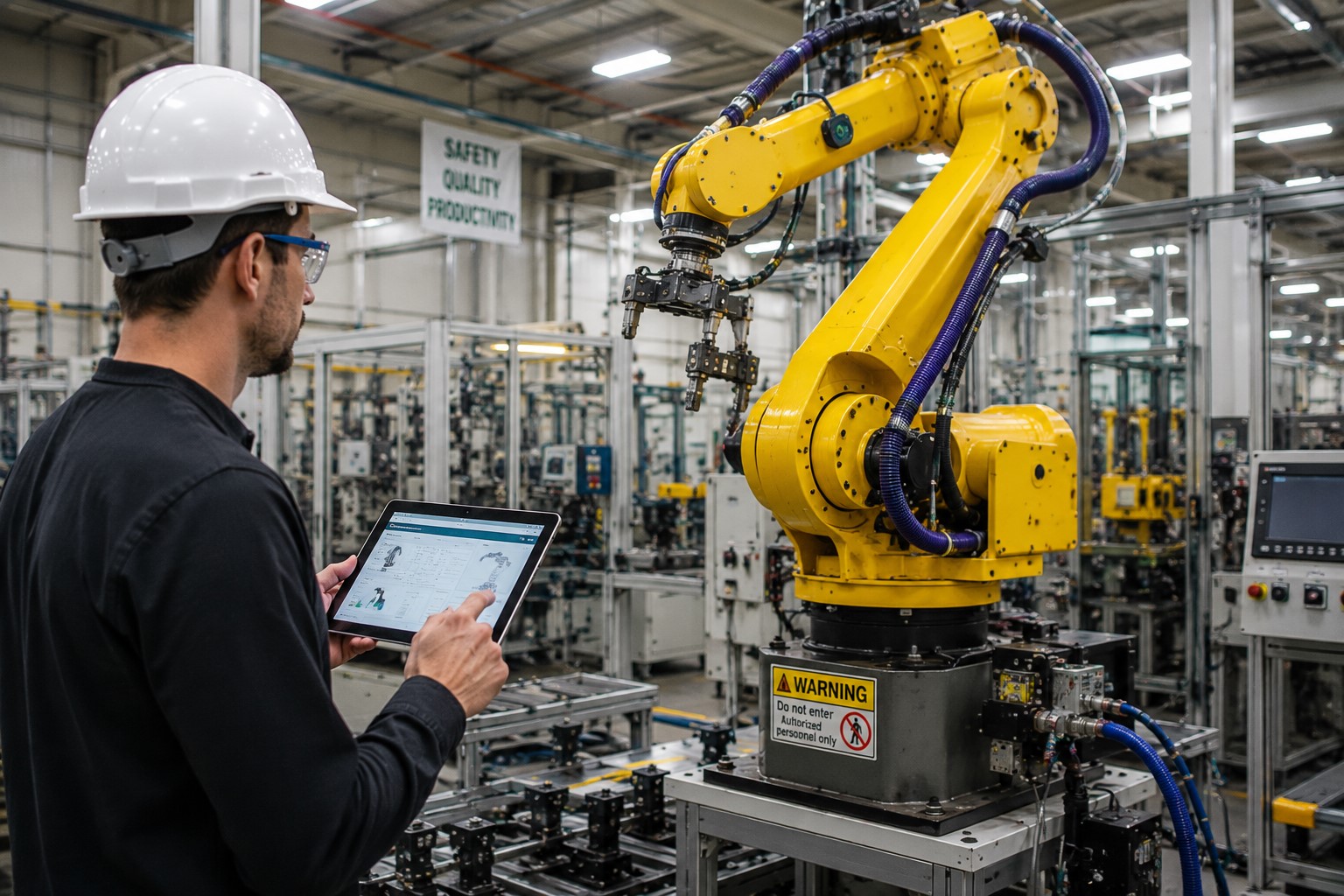
Consistent positioning may help to avoid making defects and doing rework for applications like welding, cutting, machine tending, assembling, grinding, and material handling. According to the Association for Advancing Automation, automation helps to minimize waste related to overcutting, misalignment, wrong assembly, and excessive material consumption.
The process of producing scrap usually begins with a minor mistake. The improper placement of parts and inconsistency in actions may lead to the rejection of the whole part.
Robotics automation in manufacturing aids in setting standardized parameters and movements, which could increase first-time yield and decrease the number of components that need to be redone.
For instance, robotic welders would ensure the same consistency in positioning and programmed welding paths, and robotic machine tending can ensure accurate loading and unloading of the CNC machines. The result is a more expected manufacturing process and potentially has lower rejected parts.
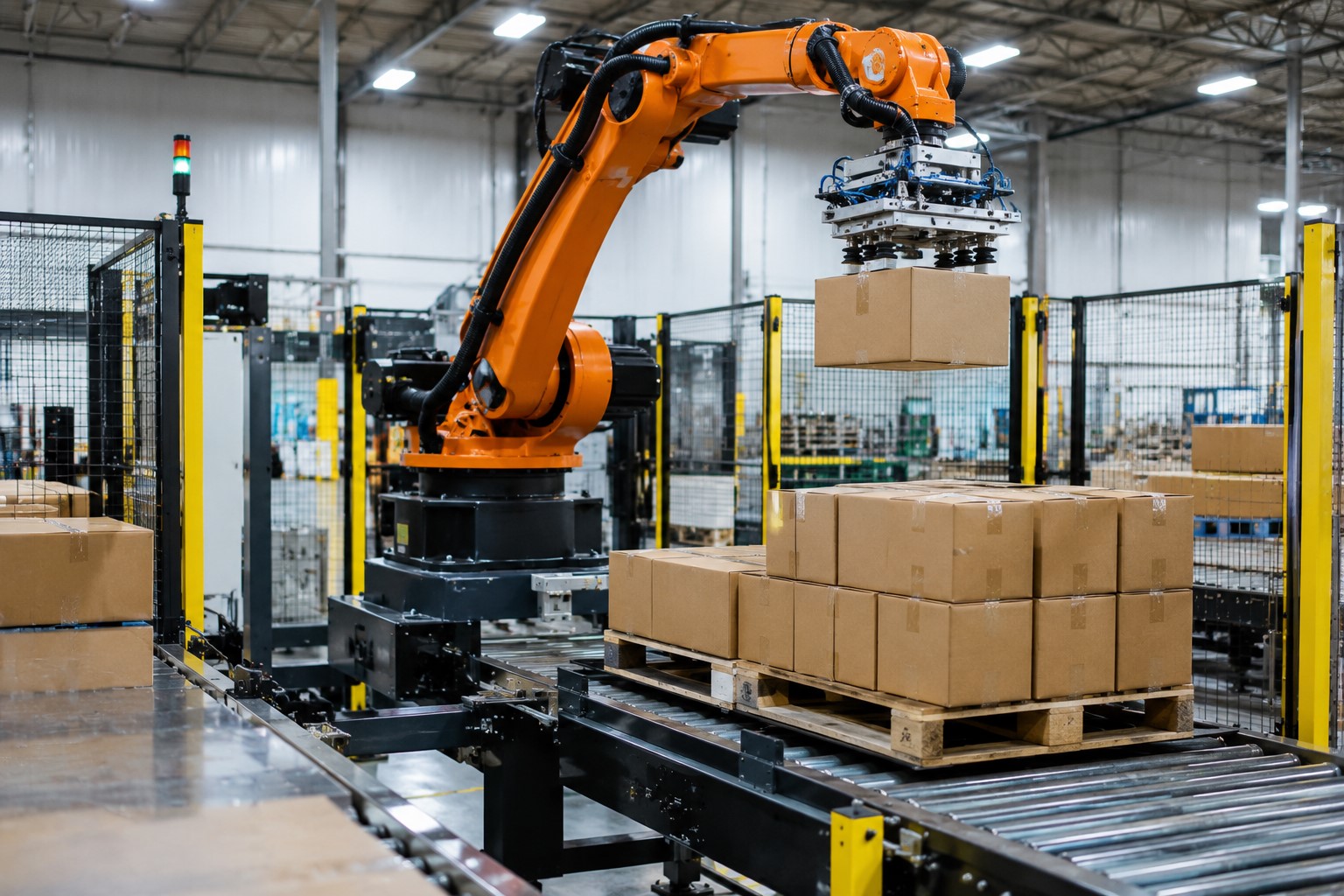
Material can even be wasted prior to the actual manufacturing process taking place due to incorrect handling, dropping of components, bad positioning, and movement. Automated systems for material handling, robotic arms, conveyors, and pick-and-place solutions would transport components in accordance with pre-programmed sequences.
Yiruixing Technology provides robotic arms, material-handling systems, conveyor systems, vision positioning systems, and automated solutions customized for manufacturing processes.
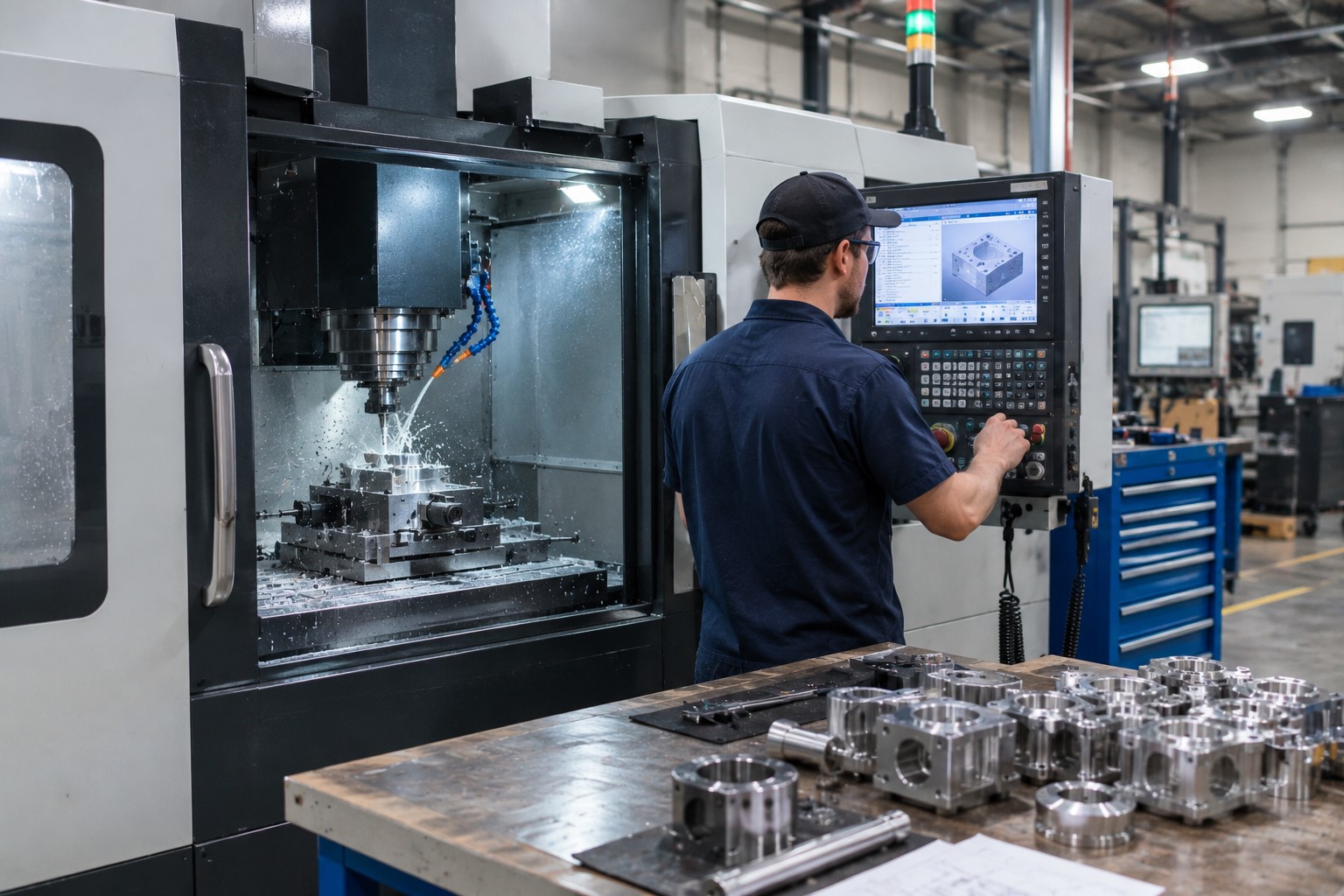
The use of robots together with CNC machining can make for a smoother manufacturing process, as robots will be able to load and unload machines, move components from one process to another, and ensure predictability of the process.
This can be beneficial in ensuring fewer mistakes happen manually and allowing the CNC machinery to work more effectively. Tending the machine accurately is especially useful when processing expensive metals and components where any defect means wasting both the material and the production time.
While material wastage can include raw metal, plastic, or components, it also includes various consumables used in the manufacturing process, like gases used in welding, paint, abrasives, lubricants, etc.
Robots can use programmed quantities and movements, which helps manufacturers avoid overapplication. Robots and automation have been known for their savings on consumables and raw materials in operations like painting or surface preparation.
Robotics systems can be integrated with machine vision and automation in quality control to detect problems of position or quality at an early stage in production.
Identifying the problem early helps to minimize the number of faulty components going through successive stages. This results in less material, energy, and effort spent on components that may not be useful at all in the end.
Efficiency in the use of material has cost savings and sustainability implications as well. Lesser use of raw materials enables manufacturers to save on waste handling, material utilization, and energy involved in making substitute components.
Studies done on AI-assisted robotic waste segregation further illustrate the wider scope of robotics for material recovery and recycling.
The volume of production, diversity of products, size of working space, and type of material used are not the same in all manufacturing plants. So, automation should revolve around the production process and not just robots added to a production process.
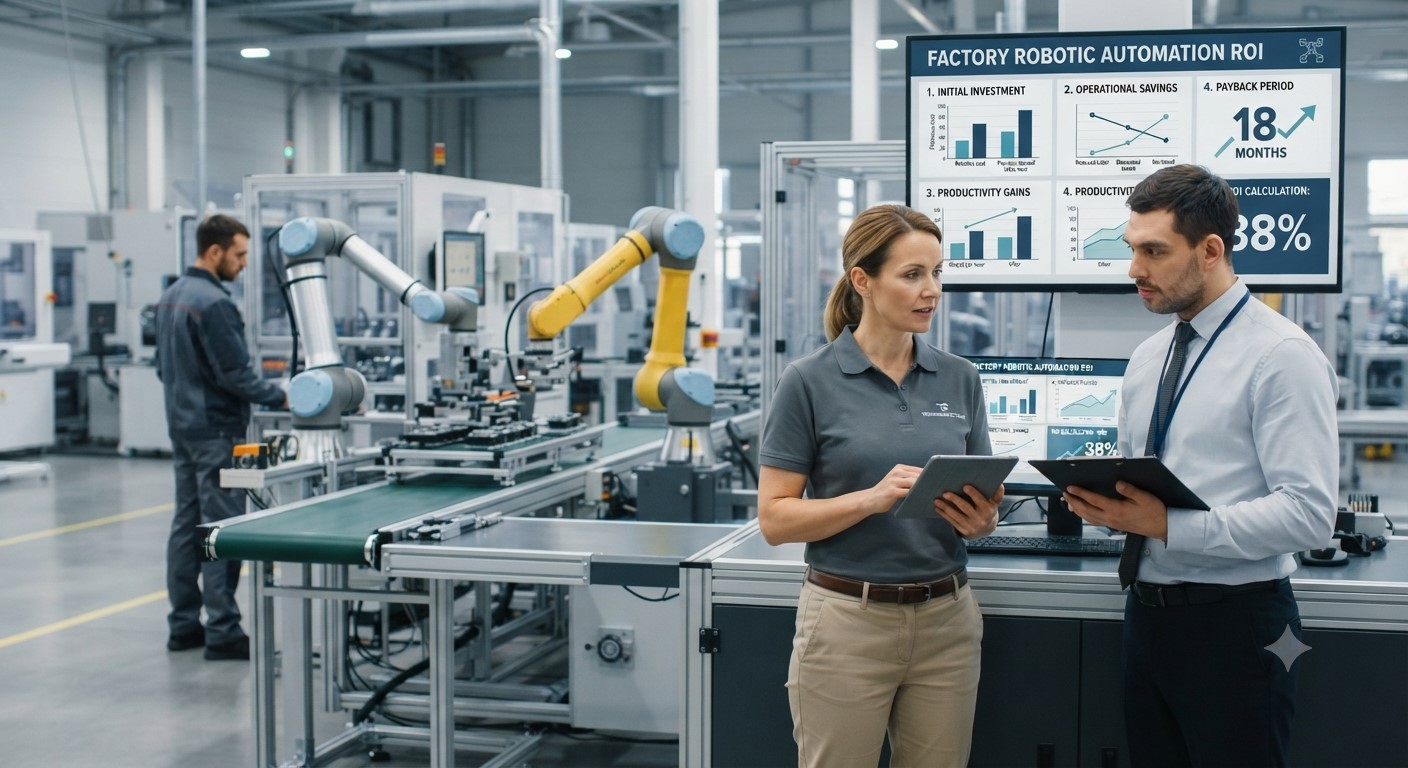
According to Yiruixing Technology, effective automation is possible by integrating robot arms, CNC machinery, conveyors, vision inspection, and control systems into an integrated production system. Some of its products include robotic arms, CNC machines, automated custom machinery, packaging systems, vision positioning, conveyors, and material handling machinery.
A well-designed system could help manufacturers pinpoint the sources of waste in their manufacturing process as well as increase their productivity, efficiency, and scalability.
Manufacturers can use robotic automation technology to eliminate waste and optimize precision, efficiency, quality, and production efficiency. Whether manufacturers want to automate CNC machine tending and material handling or robotic arms and vision systems, there is always a way to deal with specific sources of waste in the plant.
Yiruixing Technology delivers robotic, CNC, and custom automation technology for modern manufacturing processes. Learn more about Yiruixing Technology products to find out how to improve material utilization and production efficiency. Visit Yiruixing Technology now to get a quote for a customized automation solution.
How does robotic automation decrease material waste?
Robotic automation helps reduce material waste because it completes manufacturing operations at the same speed and position, using programmed motions. This can reduce errors, extra material usage, defective parts, and rework.
Could robots decrease material waste in CNC manufacturing?
Yes, robots could be used in CNC machine tending, material loading/unloading, and transfer. Consistency in positioning will help eliminate possible errors.
Is robotic automation appropriate for small-batch manufacturing?
Yes, modern programmable robots are capable of working in the production environment, in which various kinds of products in small volumes are manufactured. The right solution relies on production volume, variety of the products, workspace, and process needs.
What manufacturing operations could be automated to reduce material waste?
Commonly automated operations include CNC machine tending, welding, assembling, material handling, pick-and-place, packaging, cutting, inspection, and surface processing operations. The most appropriate operation is determined by the point in the production process when material losses occur.
Does robotic automation increase sustainability of manufacturing?
Yes, by improving process consistency and material utilization, robotic automation helps decrease the amount of scrap and rework produced. It helps increase the sustainability of the manufacturing process while reducing costs at the same time.