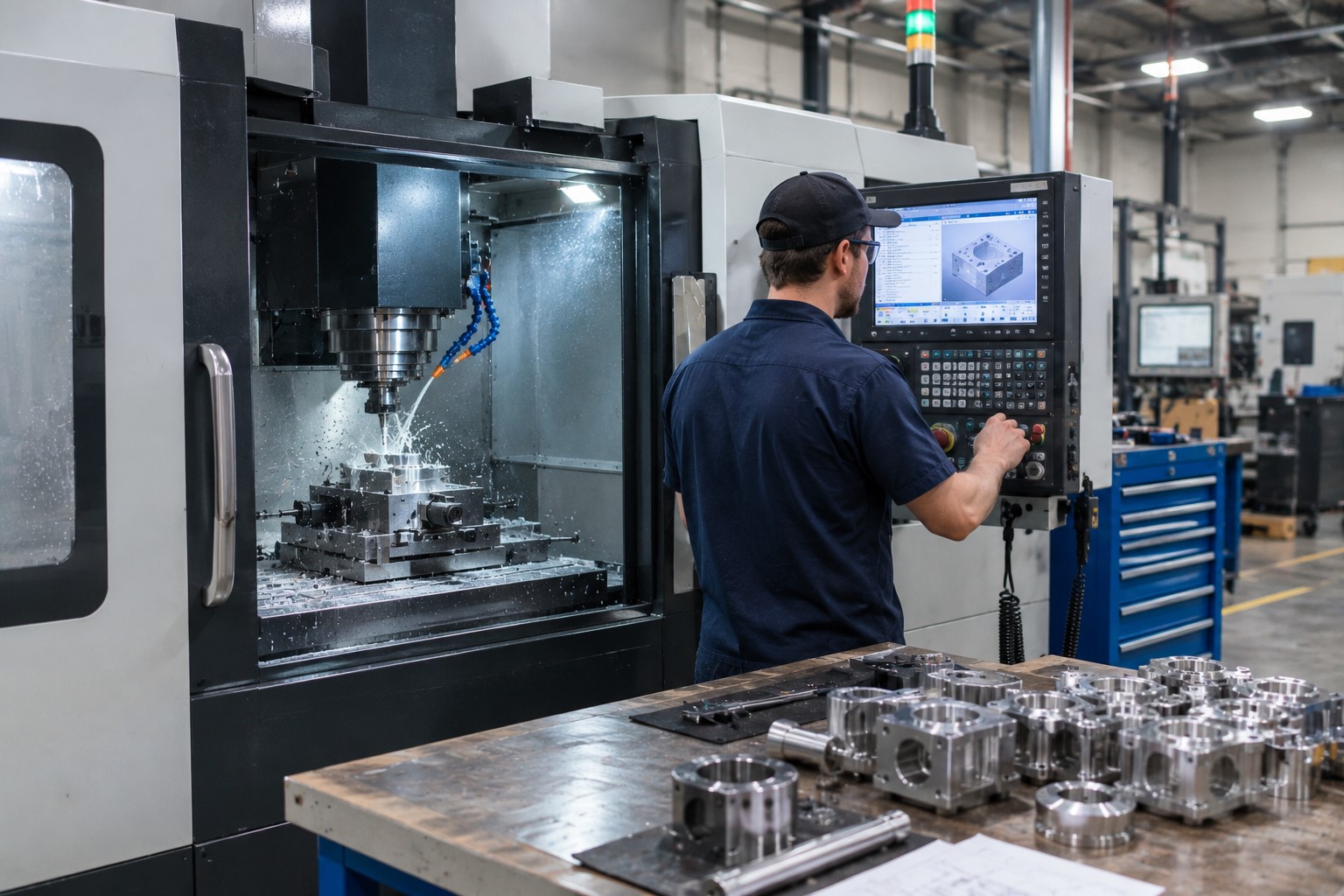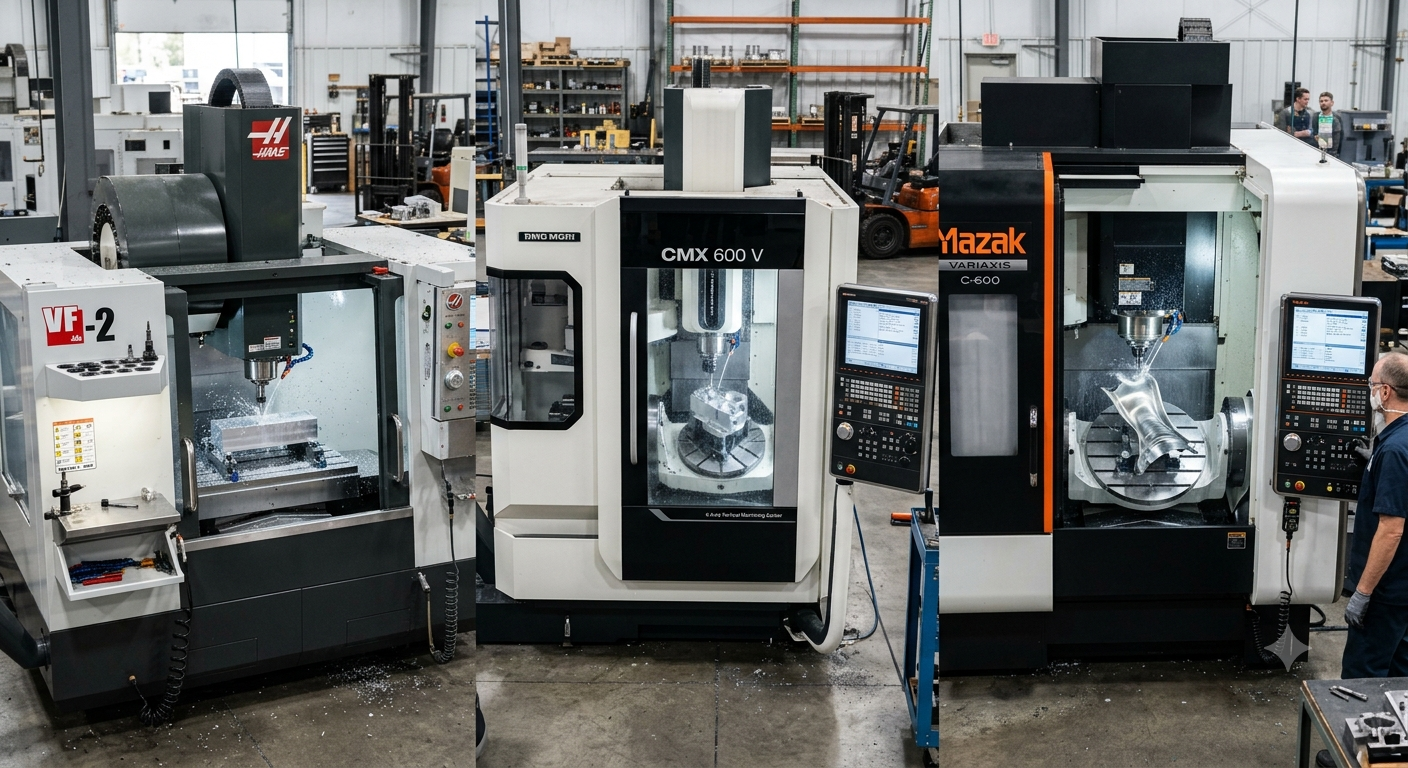
Choosing the correct CNC machine will ensure that your parts are of high-quality and allow faster cycle times and better profit margins. As many workshops have grown since starting small, it is extremely useful to have a reliable supplier for 5-axis CNC machines. Below we have outlined the differences between 3-, 4-, and 5-axis CNC machines to help you choose the correct one for your workshop.
Axis describe the directions that the tool or part can be moved in. The more axis you have, the more freedom your machine has. This allows fewer setups to be made, whilst allowing more complex shapes to be machined. At YRX our range of CNC machines offers multiple different axis options. Multi-axis machining is now common practice in the aerospace, medical, and molding industries.
These are the most basic and reliable options. With this machine the tool can only move along the X, Y, and Z axis. This means left-right, forward-backward, and up-down movement of the tool. The part will remain static whilst the cutting tool does all the work.
Best suited to brackets, plates, housings, simple molds, and general metal parts. A common example would be a vertical machining center.
Parts with complex features on multiple sides will require multiple setups, which can take additional time and increase the chance of misalignment.
The 4-axis machine includes an additional rotating axis known as the A-axis. This allows the parts to rotate, allowing the tool to access more faces of the part in one setup.
Best suited to camshafts, gears, engraved cylinders, pump components, and parts with angled holes.
Limited rotation, meaning deep undercut areas and complex contours, can still be problematic.
A 5-axis CNC machine has two rotational axis, allowing the cutting tool to approach the component from almost any direction. This allows complex components to often be machined in one setup.
Best Suited to turbine blades, impellers, aerospace parts, medical implants, automotive prototyping, and complex mold cavities.
There are many considerations when looking to purchase a 5-axis CNC machine. The spindle power, stiffness, control, and after-sales will all have an impact on your return in the long run. Our five-axis machining center range at YRX is perfect for this type of high-demand work.
| Features | 3-Axis | 4-Axis | 5-Axis |
| Axis of Movement | X Y Z | X Y Z+1 rotational axis | X Y Z + 2 rotational axis |
| Component Complexity | Low | Medium | High |
| Setups | Multiple | Fewer | Often just one |
| Cost | Lowest | Moderate | Most expensive |
| Best For | Flat Components | Cylindrical Components | Complex 3D Components |
Consider these questions:
You get installation, training, spares, and quick technical support by choosing a reliable 5-axis CNC machine supplier. Consider:
A good 5-axis CNC machine supplier will help you plan for future growth, such as investing in robotic loading. If you are not ready to invest in a machine, you can outsource with our custom machined parts service. We can provide precise components with no capital outlay.
More industries can be viewed on the YRX website.
Choose 3 Axis for simple and cost-sensitive jobs. Choose 4 axis for rotational movements but without a large increase in cost. A 5-axis CNC machine will give you the complexity, accuracy, and speed that will affect your profits. By working with a 5-axis CNC machine supplier with experience, you will make the change easier.
At Foshan Yiruixing Technology Co., Ltd. (YRX Group), we manufacture CNC machine tools, industrial robots, and customized automated equipment. We provide exports to countries throughout Europe, South America, Southeast Asia, and the Middle East. If you are looking for a 5-axis CNC machine for sale or a reliable 5-axis CNC machine supplier, contact our team for a free quote or look through our full product range.
1. What is the biggest difference between 3-axis and 5-axis CNC machines?
A 3-axis machine only moves on the X, Y, and Z axis. A 5-axis CNC machine includes 2 rotary axis, allowing complex shapes to be machined from numerous angles.
2. Is it worth getting a 5-axis CNC machine?
Yes. If you’re manufacturing complex, accurate/high-value parts. It will save setup time, give increased accuracy, and reduce fixing costs.
3. What factors should I think about when buying a 5-axis milling machine for sale?
Spindle power, stiffness, control, warranty, spares, training, and after-sales.
4. Can a 4-axis machine do the same as a 5-axis machine?
Not always. 4-axis machines will allow rotation on one plane. However, if you have deep undercutting or complex shapes, you will generally need a 5-axis movement.
5. Does YRX offer any bespoke CNC solutions?
Yes. We design bespoke solutions to suit your parts, workshop space, and processes. We can include robotic automation for loading/unloading.