How Robotic Palletizing Can Improve Warehouse and Factory Operations – With increased demands for efficiency and cost-cutting measures being constantly put forward, modern warehouses and factories experience immense pressure to enhance productivity, cut costs, maintain product quality, and increase production levels. Robotic palletizing is increasingly becoming a viable automation technology for companies that want to automate the end-of-line process and enhance safety.
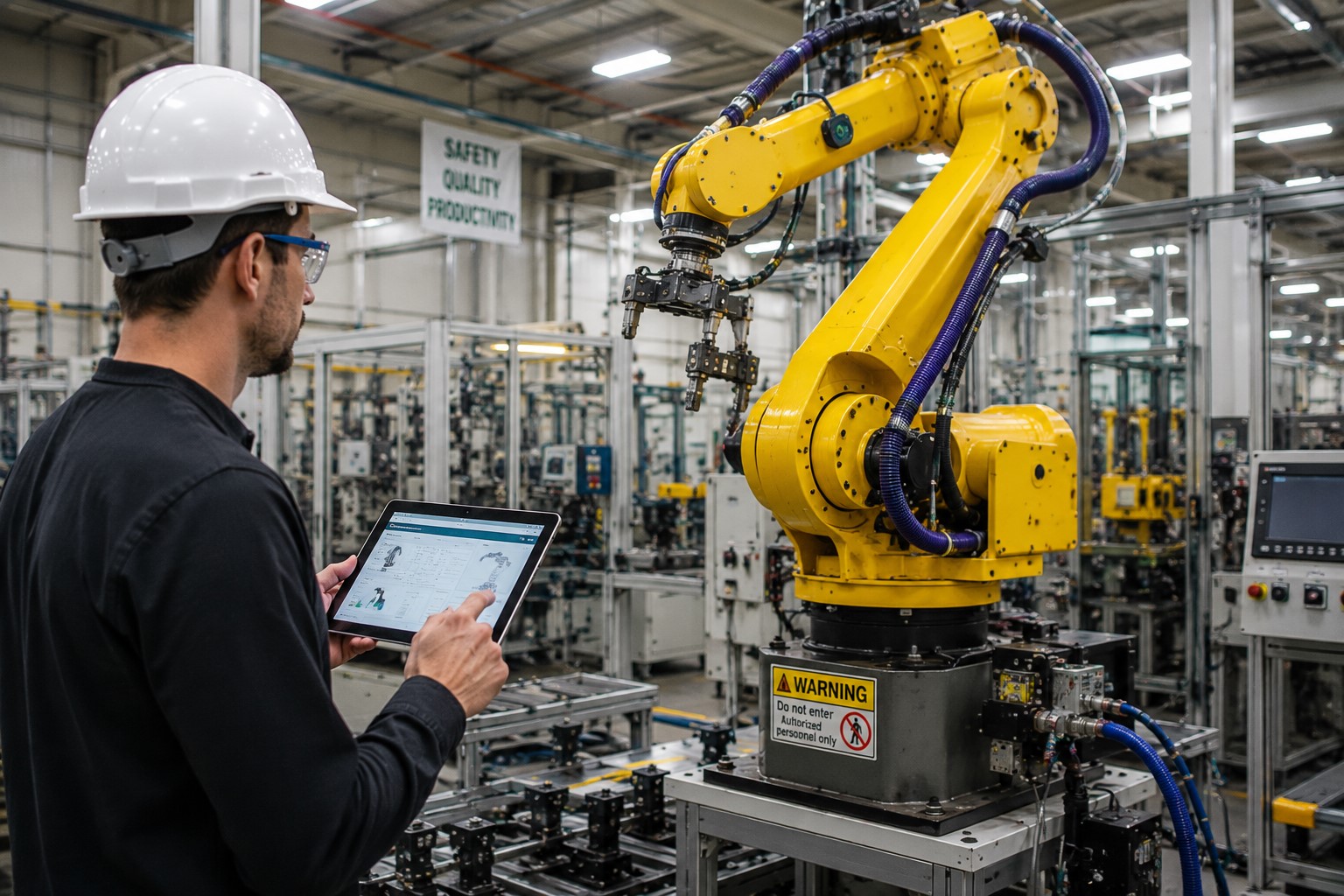
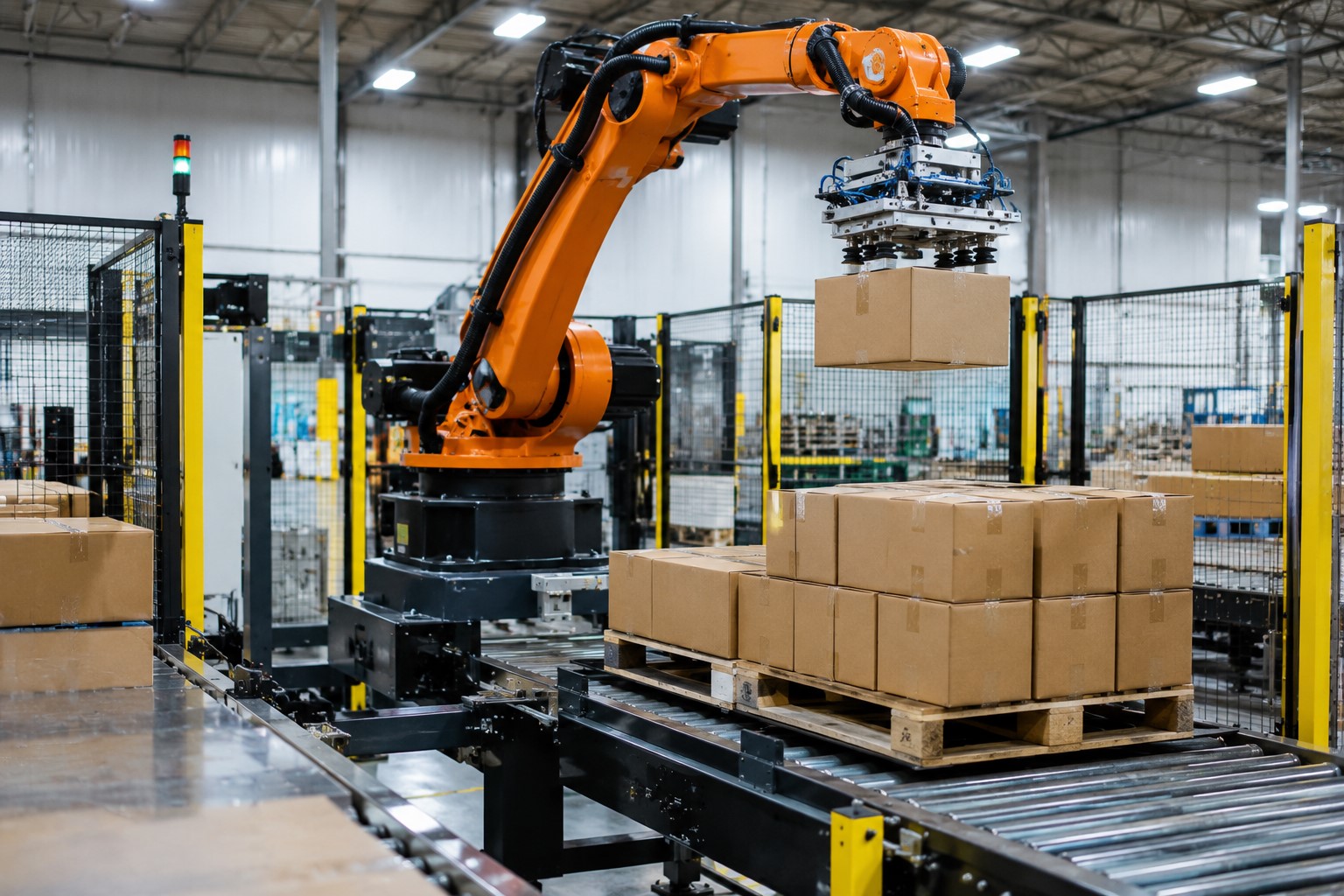
Robotic palletizing refers to the use of industrial robots to automatically select, arrange, and stack products and packages on top of pallets following a set pattern. With the integration of conveyors, sensors, vision, and packaging systems, a robotic palletizing system becomes a more connected material handling system.
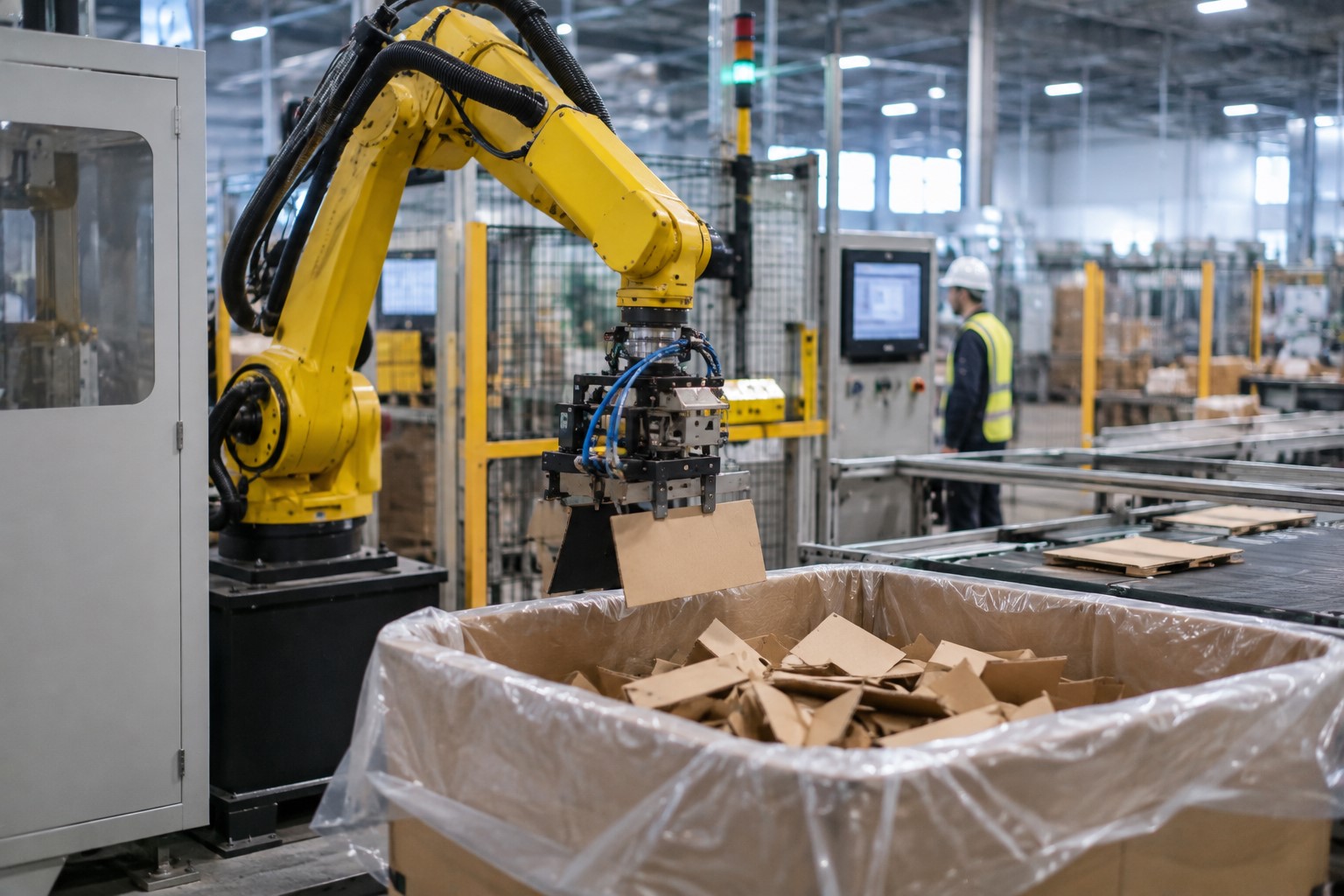
Robotic palletizing refers to the automation process where a robotic arm stacks boxes, bags, cartons, cases, and any other items onto pallets in an organized pattern. In contrast to using pure manual labor, robotic palletizing entails the use of robots in performing the repetitive tasks of picking and stacking.
An automatic palletizing system can consist of a robotic arm, conveyor system, gripper, pallet dispenser, sensors, vision positioning system, and robotic control system, among other components. Together, these elements can function to move products from packaging production lines to full pallets with little need for manual labor.
Automated processes such as this can facilitate better material flow in warehouses and factories from production and packaging to storage and distribution.
One of the primary advantages of robotic palletizing is its ability to complete the palletizing process in a repetitive fashion.
Robots do not experience fatigue like people who complete repetitive actions such as picking up and stacking boxes.
In a large-scale production factory, robotic palletizing can be used to help create a predictable production rhythm. It also reduces bottlenecks during the final phase of packaging that may have negative effects on the performance of other machinery.
Robotics can be programmed with a variety of palletizing patterns for different products and production requirements.
Manual pallet stacking can lead to inconsistencies in palletizing accuracy and overall product quality. With robots following a certain programmed pattern, palletizing accuracy and consistency can be achieved.
Palletizing done properly can lead to improved load stability throughout internal transportation, storage, and shipment processes. This will help manufacturers ensure that they have consistency in packaging operations for high-volume production.
In combination with machine vision systems and automated conveyor systems, robotic palletizing can recognize the positions of the products and manage their movements.
Palletizing usually entails repeating such tasks as lifting, moving, bending, and stacking products. Robotic palletizing can help eliminate such physically intensive labor.
Rather than automate all manually performed activities, companies can rely on robots to do repetitive material handling activities as employees take care of machine operations, quality control, maintenance, planning of production, etc.
This makes robotic palletizing a solution particularly useful in cases when repetitive handling constitutes a significant part of the production process.
Workplace safety is also a crucial factor when choosing an automated process of material handling. The repetition of heavy-lifting tasks may be physically exhausting and pose some handling risks.
By automating palletizing operations, robots can minimize direct interaction with those operations by humans. Moreover, properly planned robotic installations may include safety guarding, emergency stop systems, sensors, and other protective mechanisms.
Nonetheless, robots for palletizing should always be implemented in accordance with machine safety requirements and conditions at the facility.
Labor availability and expenses related to repetitive manual labor can influence the efficiency of manufacturing and warehousing. Robots provide an opportunity to automate a clearly defined operation and assign workers to operations that require judgment and special expertise.
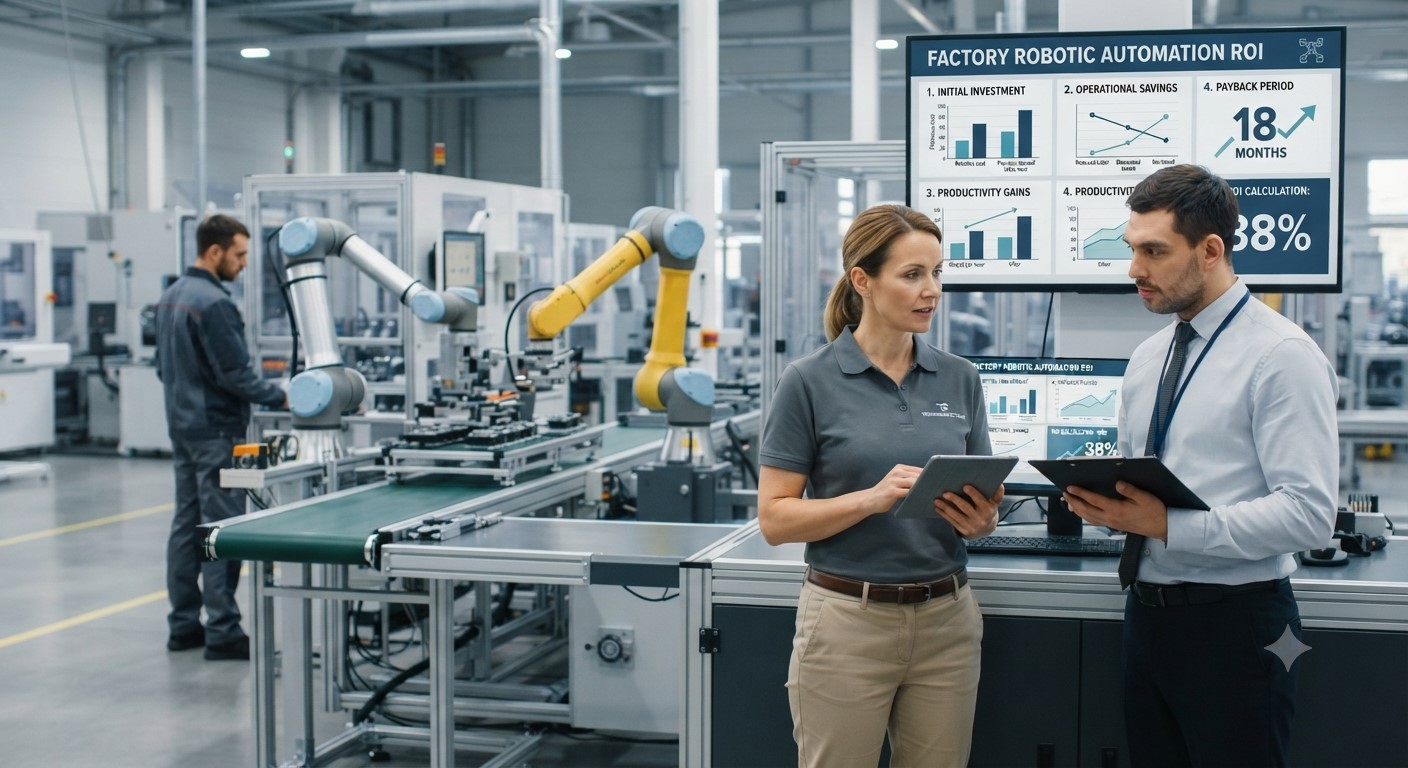
The overall financial effect will depend on many factors such as production rate, diversity of products, labor needs, utilization of the equipment, maintenance, integration, and operating conditions.
That is why it is necessary to evaluate the implementation of robotic palletizing within the whole production process and not only the robot itself.
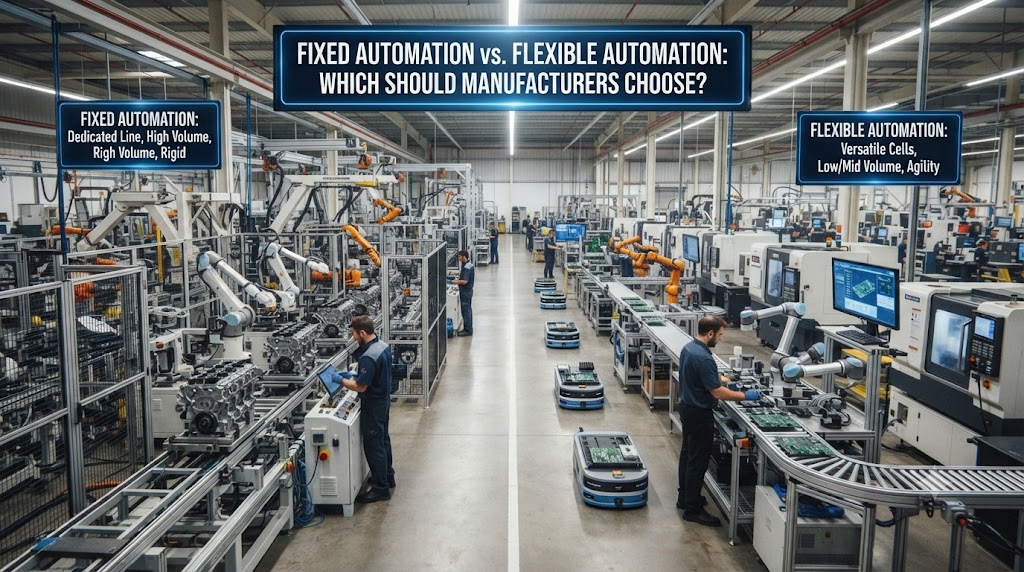
Manufacturing facilities usually work with multiple products and packing options. Flexibly automated systems can be configured and reconfigured in accordance with production needs.
Additionally, the strategy of scalable automation allows manufacturers to increase production capacity and install new equipment later.
Robotic palletizing could be linked with case packing equipment, packaging machinery, conveyors, vision positioning systems, and material handling equipment to create an integrated automated production line.
Most potential can usually be achieved by linking robotic palletizing with other automation techniques. A robotic palletizer would become one part of a larger industrial automation process.
Data, sensors, conveyors, robotic controls, packaging machinery, and manufacturing machinery would interact with each other and create a coordinated process. Such an approach allows manufacturers to spot bottlenecks, achieve consistency in process performance, and establish the foundation for smart factory creation.
Yiruixing Technology specializes in integrated automation solutions including robotic arms, customized automated equipment, conveyors, vision positioning systems, packaging machines, and material handling equipment.
Robotic palletizing could increase efficiency of warehouses and factories by providing automation of stacking process, ensuring consistent material handling, decreasing manual effort, and integration of end-of-line process into manufacturing process.
Are you looking to upgrade your manufacturing or packaging process? Yiruixing Technology offers robotic arms, customized automated systems, conveyor systems, vision positioning systems, packaging machinery, and material handling automation. Contact Yiruixing Technology and explore industrial automation solutions and share your manufacturing needs with its engineering team for a scalable automation system.
What is the primary function of robotic palletizing?
The primary function of robotic palletizing is automatic stacking of items such as products, cartons, bags, and cases on a pallet in an orderly manner. This makes it possible to automate repetitive material handling tasks at the end of the production line.
What are some of the advantages of robotic palletizing?
Some of the key advantages are increased efficiency, orderly pallet stacking, decreased manual repetition, consistency in the process, and integration with conveyors, packaging, and other industrial automation systems.
Do robotic palletizers work with different items?
Yes. Depending on the type of robot, gripper, control system, and system design, the robotic palletizing systems can be customized in order to accommodate different products in terms of size, weight, packaging, and pallet patterns. Flexible automation solutions may prove effective for manufacturing plants that produce several types of products.
Can robotic palletizing be implemented by small and medium-sized manufacturers?
Small, medium, and large manufacturers may benefit from robotic palletizing in case of repetitive operations, bottleneck operations, or increased levels of precision required. It will depend on production volumes, product variety, amount of space, financial resources, and other factors.
What is the way to select a robotic palletizing system?
It will depend on production speed, size and weight of products, pallet patterns, product variety, space, safety regulations, integration with other equipment, maintenance, and other factors. A customized automation analysis will allow you to determine the most appropriate robot, gripper, conveyor, control system, and other equipment.