

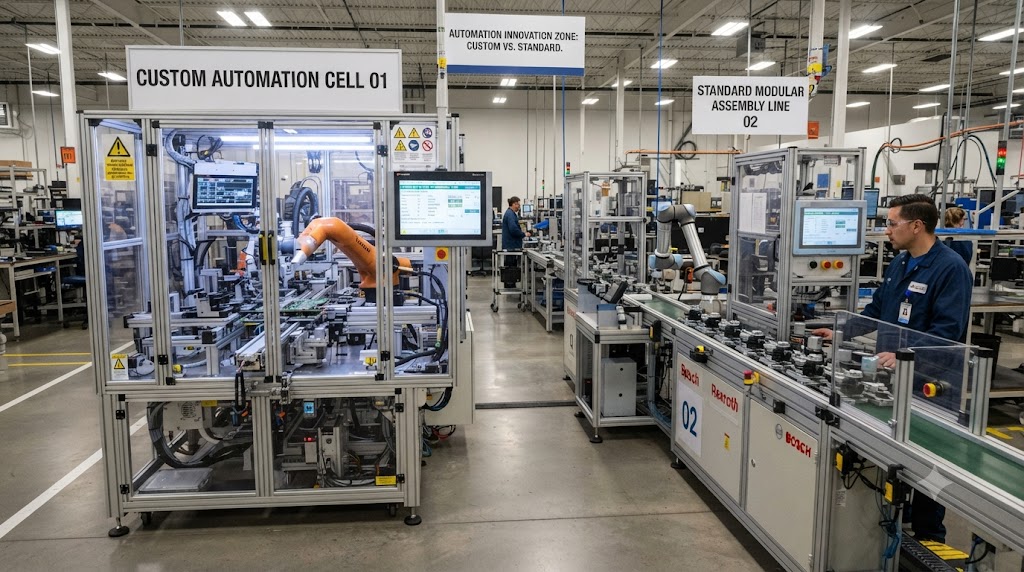
If you’re operating a production line, chances are you’ve found yourself asking this question at least once. Should you buy ‘off-the-shelf’ or automation machinery built for your exact process? It is not a small decision – it impacts your expenses, schedule, and most importantly, how efficient your line actually works five years later.
To put it plainly, neither is always ‘better.’ The best for your organisation depends on your range of products, your output goals and your available floor space. Yiruixing Technology outlines each route, so you can make the best decision for custom automation machinery vs standard automation equipment which is better for you.
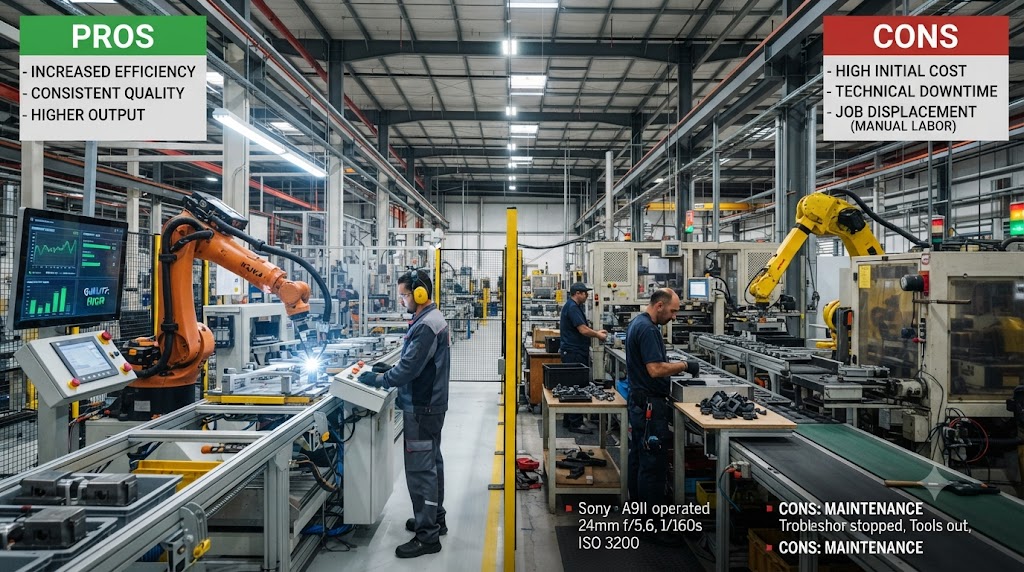
Standard automation equipment is ready-to-ship machines that exist off the shelf-a conveyor, an auto bagging machine, a robotic arm, a CNC machine that are general purpose. Such machines are generally available in large volumes from the factory at a decreased unit cost, while also enabling faster production times. For a “relatively normal” manufacturing process with moderate production needs, a standard automation machine can satisfy demand quicker than specifying and ordering a custom, in-house engineered machine would allow.
Where it lacks is its flexibility. The standard automation equipment has been manufactured with “average” work needs in mind, and may ultimately require you to adapt your process to work with the automation equipment.
Pros:
Cons:
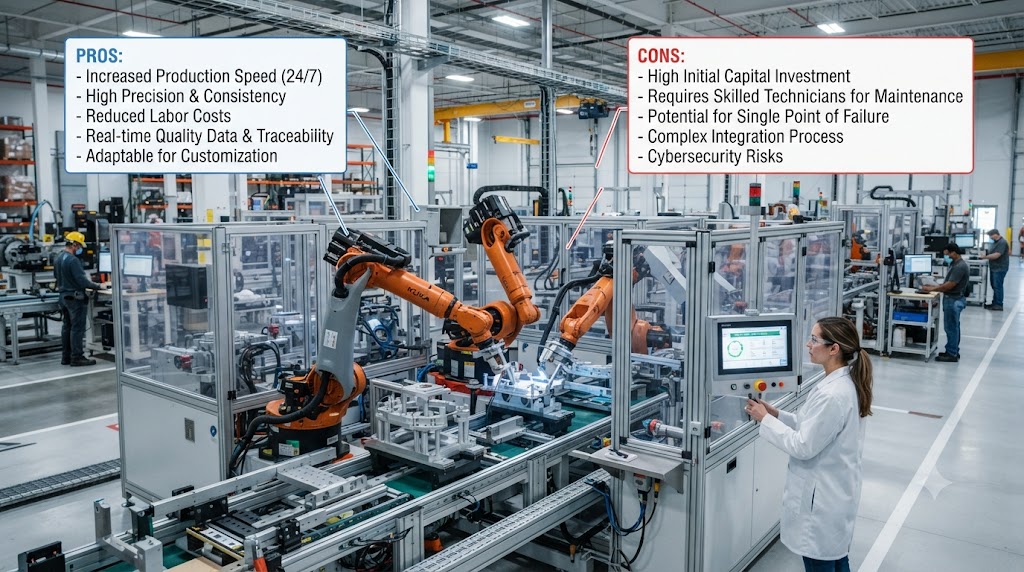
Custom automation equipment, in contrast, is built based on your real production needs – your product size, your plant layout, your throughput goals, and how you need it to interface with other machines in your plant. A Yiruixing Technology-type manufacturer excels here; you can work backwards, building the equipment around your production process instead of shaping your process around generic equipment.
Worldwide in 2024, there were about 542,000 industrial robots that were installed, as per the International Federation of Robotics (IFR, World Robotics Report 2024). Currently, there are more than 4.6 million robots operating worldwide, and a majority of those will be supplied by Manufacturers requiring custom configured solutions versus generalised solutions. This is exactly the niche which custom automation provides.
Pros:
Cons:
I believe there are three very real factors you should consider:
NIST Manufacturing Extension Partnership (MEP) guidelines also note that rapid programmability and re-programmability of robotic systems enable factories to change with the changes in needs, at minimal or no machining setup costs-a strong reason to use customised automation for increasing or diversifying businesses.
Standard machines: typically have lower upfront ownership costs and are delivered quicker. Automation: can have additional upfront design costs and a slower delivery time, but will result in extra value at the manufacturer end where you’ll be able to produce custom parts geometry, tight tolerance products or even dynamic product lines – and avoid the less visible costs associated with overcoming issues with a less-than-perfect fit with a standard machine, production downtime or inconsistent quality.
At Yiruixing Technology, we’ve supported customers in many industries, including sheet metal fabrication, auto parts production, mould making and smart factory implementation-with systems that were custom designed and manufactured from scratch to meet their specific needs – not simply off-the-shelf machines. For instance, Yiruixing Technology recently delivered a custom CNC turning-milling center to a customer in India that includes a Siemens control, a machining precision of less than 10 m and was successfully delivered and installed, passing inspection and test run within 60 days.
As evidenced by the over 500 projects completed and 20+ years of engineering experience, Yiruixing Technology clearly demonstrates that real manufacturing production can only be achieved through correct matching of the automation system to the production line, not merely purchasing “the last and fastest machine in town”.
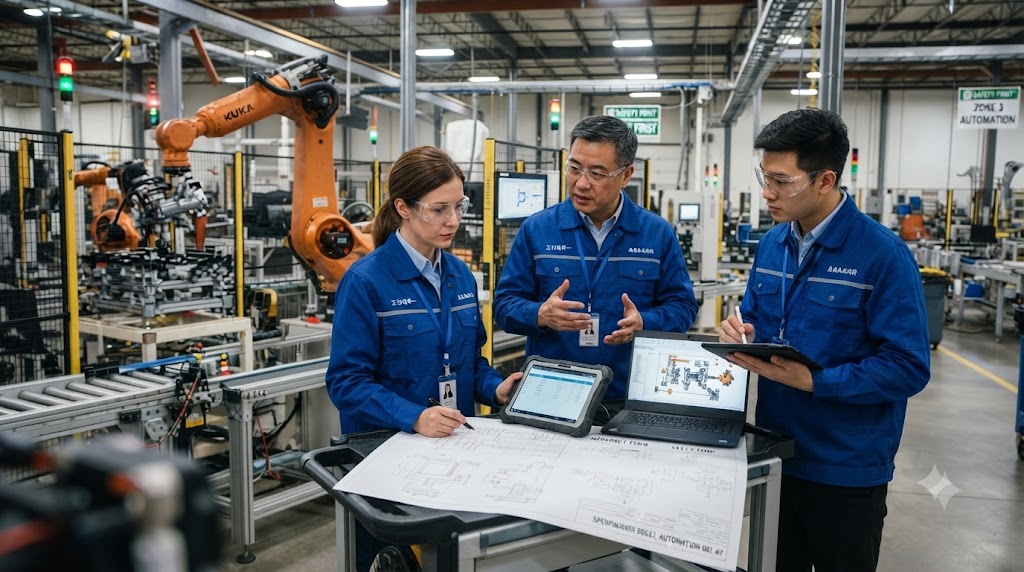
For high-volume, uniform production, off-the-shelf automation might be good. If the applications require flexibility, high precision and smooth integration into an existing production line, custom automation machines developed by a system integrator and partner, such as Yiruixing Technology, are often the economical long term investment.
Choosing the best automation for your production line: Contact Yiruixing Technology today for your free consultation!
We only make about 500 units a week — is custom automation even worth it for us, or is that overkill?”
It may not be overkill at all. A customised cell does not necessarily mean a huge size or higher cost; it is meant to fit your production processes. In low-volume applications, a cell sized and customised appropriately (e.g., a robot arm with vision for pick-and-place) can even be better than that large, unwieldy off-the-shelf cell that is too big for you, or too inflexible to handle product variations.
How long does it actually take to get a custom machine built and running, compared to just buying something off the shelf?
Usually, the standard machines are delivered quicker due to their pre-assembled form. Custom machines take longer during the design stage — a reliable manufacturer will give you a clear delivery timeline upfront, so there’s no confusion when you commit about the delivery date of the machinery when you commit to it. Request the committed lead time in writing
What happens if my product changes down the line — will the custom machine still work, or am I stuck?
And this is why that initial design discussion is so critical. When you inform your automation provider about coming product changes during the planning stage, he can integrate features such as variable-position tooling, adaptable reprogrammable logic, modular sections, and so on, giving you a machine that adapts to your needs as you progress rather than having to replace it when a new product is launched.
Is it hard to get spare parts and support for custom equipment, especially since it’s not something everyone else uses?
Completely valid concern! Ask about spare part availability, warranty, and service before you make a purchase not after the device breaks. Any good manufacturer should be willing to offer their general turnaround time for parts and explain if they can remotely assist your technician or service equipment on-site.