

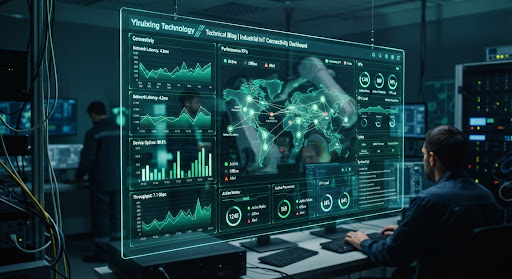
The manufacturing industry is undergoing a remarkable transformation driven by Industry 4.0, where smart factories rely on connected machines, Industrial Internet of Things (IIoT) devices, cloud computing, artificial intelligence, and real-time data analytics to optimize production. While these technologies significantly improve efficiency, productivity, and operational visibility, they also introduce new cybersecurity challenges. As manufacturing systems become increasingly interconnected, protecting critical infrastructure from cyber threats is no longer optional—it is a fundamental requirement for ensuring business continuity and operational resilience.
Unlike traditional manufacturing environments, connected factories continuously exchange data between machines, sensors, production equipment, enterprise systems, and cloud platforms. This seamless connectivity enables predictive maintenance, remote monitoring, and intelligent decision-making. However, it also expands the attack surface, making industrial systems more vulnerable to cyberattacks.
A successful cyberattack can lead to:
For manufacturers, even a few hours of downtime can result in significant production delays and increased operational costs.
Modern manufacturing facilities face a wide range of cyber risks, including ransomware attacks, phishing attempts, malware infections, insider threats, and unauthorized network access. Industrial Control Systems (ICS), Programmable Logic Controllers (PLCs), Human Machine Interfaces (HMIs), and connected IoT devices are common targets because they directly influence production operations.
Without proper security measures, attackers may exploit outdated software, weak passwords, unsecured remote access, or vulnerable network devices to compromise factory systems.
Creating a secure manufacturing environment requires a layered approach that combines technology, processes, and employee awareness. Manufacturers should regularly assess potential vulnerabilities, implement strict access controls, and monitor network activity in real time.
Key cybersecurity practices include:
These proactive measures help reduce security risks while ensuring uninterrupted manufacturing operations.
Industrial IoT devices play a crucial role in modern manufacturing by collecting and transmitting operational data. However, these connected devices can become entry points for attackers if they are not properly secured.
Manufacturers should ensure that all IIoT devices are regularly updated, protected with strong authentication, and monitored continuously. Secure communication protocols and encrypted data transmission further strengthen the security of connected production environments.
Technology alone cannot eliminate cyber risks. Employees remain one of the most important lines of defense against cyber threats. Regular cybersecurity awareness training helps staff recognize phishing emails, suspicious activities, and unsafe practices that could expose manufacturing systems to attacks.
By creating a security-first culture, organizations can significantly reduce human errors that often lead to cybersecurity incidents.
As smart factories continue to evolve, cybersecurity must become an integral part of every digital transformation strategy. Integrating security into the design of automation systems, robotics, cloud infrastructure, and connected machinery ensures that innovation does not come at the expense of operational safety.
Manufacturers that invest in robust cybersecurity frameworks are better positioned to protect their assets, maintain customer trust, comply with international regulations, and adapt confidently to future technological advancements.
The future of manufacturing depends on secure, connected, and intelligent production environments. As cyber threats become more sophisticated, manufacturers must adopt proactive cybersecurity strategies to protect critical infrastructure, valuable data, and business operations. By combining advanced security technologies, employee training, continuous monitoring, and best practices, connected factories can safely embrace Industry 4.0 while maintaining reliable, efficient, and resilient manufacturing processes.
Cybersecurity is no longer just an IT responsibility—it is a core pillar of modern manufacturing success.