

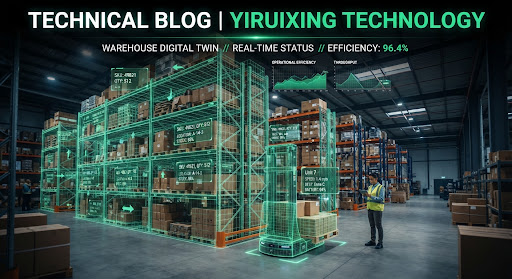
Digital twin technology is transforming modern manufacturing by creating virtual replicas of machines, production lines, and entire factory operations. By combining real-time data from sensors, Industrial IoT (IIoT), and advanced analytics, digital twins enable manufacturers to monitor equipment performance, simulate production scenarios, and optimize processes before implementing changes on the factory floor. This innovative approach helps businesses reduce operational risks, improve product quality, and achieve greater efficiency in today’s highly competitive manufacturing landscape.
A digital twin is a virtual representation of a physical asset, machine, or manufacturing process that continuously receives real-time data from its physical counterpart. This live connection allows engineers and production managers to monitor equipment performance, detect anomalies, and evaluate operational conditions without interrupting production. Digital twins provide valuable insights that support better planning, faster decision-making, and more efficient manufacturing operations.
Digital twins provide manufacturers with accurate visibility into production performance by collecting and analyzing operational data. Engineers can identify inefficiencies, optimize workflows, and predict equipment failures before they occur. This proactive approach reduces downtime, increases equipment reliability, and enhances overall manufacturing productivity.
Key advantages include:
One of the greatest strengths of digital twin technology is the ability to simulate production changes before implementing them in the real world. Manufacturers can evaluate new production layouts, optimize machine settings, test automation strategies, and identify potential bottlenecks without disrupting ongoing operations. This significantly reduces implementation risks while improving production planning.
Rather than relying on scheduled maintenance, digital twins continuously analyze machine conditions using real-time sensor data. By detecting abnormal vibrations, temperature fluctuations, or performance changes, manufacturers can schedule maintenance only when necessary. This predictive maintenance approach minimizes unexpected equipment failures and extends machine lifespan.
Digital twins play a vital role in Industry 4.0 by connecting physical production systems with intelligent digital technologies. When integrated with Industrial IoT, artificial intelligence, cloud computing, and automation systems, digital twins enable smarter manufacturing environments that continuously learn and improve through data-driven insights.
Digital twin technology is widely used across industries including automotive, aerospace, electronics, medical device manufacturing, food processing, logistics, and heavy engineering. Whether optimizing robotic production lines or monitoring complex CNC machining operations, digital twins help manufacturers improve operational efficiency while maintaining consistent product quality.
As manufacturing becomes increasingly connected, digital twins will continue to play an essential role in factory optimization. Future advancements in artificial intelligence, machine learning, and edge computing will further enhance digital twin capabilities, enabling autonomous decision-making, advanced process optimization, and highly intelligent manufacturing systems.
Digital twins are reshaping the future of manufacturing by providing real-time visibility, predictive insights, and intelligent process optimization. By creating accurate virtual representations of production environments, manufacturers can improve efficiency, reduce costs, minimize downtime, and accelerate innovation. Organizations that embrace digital twin technology today are better positioned to build smarter, more resilient, and highly competitive manufacturing operations for the future.